.COM
(c) solarwindhydroenergy.com. Powered by Blogger.
Showing posts with label Solar Energy. Show all posts

Impact of Solar Power in India


The amount of solar energy available for tapping in India in a year is more than the capacity of all the fossil fuel reserves in the country! Solar energy is obviously a natural resource that is available in abundance (and for free) in India, which we have started utilizing in a large scale over the last few years. However, solar power can/should create an even higher impact in the electricity generation scenario in India. 

As of July 2015, the total installed capacity of solar power in India is around 4 GW, while the total installed capacity of all forms of electrical utilities is around 285 GW. India is ranked No.1 in terms of solar energy production capacity per watt installed. The demand is ever increasing and fossil fuels can only generate so much electricity. Clearly, there is a lot of scope for solar power to create a larger impact in India.

Top 5 Indian States with Highest Installed Solar Energy Capacity:

  1. Rajasthan - 1199.70 MW
  2. Gujarat - 1000 MW
  3. Madhya Pradesh - 673.58 MW
  4. Maharashtra - 378.70 MW
  5. Andhra Pradesh - 279.44 MW
Top 5 Largest Solar Power Projects in India: 

  1. Charanka Solar Park, Gujarat - 221 MW
  2. Welspun Solar MP Project, Madhya Pradesh - 151 MW
  3. Sakri Solar Plant, Maharashtra - 125 MW
  4. Green Energy Development Corporation, Odisha - 50 MW
  5. Tata Power Solar Systems, Madhya Pradesh - 50 MW
Solar power can be installed on unproductive and barren land with a high solar irradiation. These solar power plants need to be connected to the grid, which needs to be arranged by state-run electrical utility agencies. Or, micro grids can be established in the areas surrounding solar power plants and the electricity can be used right there. Micro grids are an efficient way to utilize power as transmission losses are minimized. 

The requirement of land for solar power projects (6 acres per MW) is similar to other utilities like coal-fired power plants and hydro-electric power plants. Solar power plants are not dependent on supply of raw materials as they receive free sunlight from the sun. Although land availability is a challenge, people are approaching this challenge in interesting ways by co-locating solar panels along with wind energy projects, on the top of roofs of residential and commercial buildings, and even on the top of canals which has an additional benefit of reducing water loss due to evaporation. 

The Govt. of India has been encouraging solar projects and solar power plants through various schemes and incentives for power producers, large organizations and even individual houses. There is subsidy for solar lanterns and solar pumps for the rural and agricultural sector; there is subsidy for solar water heaters and solar power plants for individual houses; there is acceleration depreciation, capital depreciation, assured power purchase agreements and renewable energy certificates for commercial organizations. 

As you can see, solar energy has already created a good impact in India, and the demand for solar power is going to only increase and become more popular in the near future. Solar energy has a lot of potential in India and everyone should unite to create an even larger impact that would satiate our power requirements while not harming the nature.


Read more about Solar Power in India from this Wikipedia article.
This blog post is inspired by the blogging marathon hosted on IndiBlogger for the launch of the #Fantastico Zica from Tata Motors. You can apply for a test drive of the hatchback Zica today.
Read More...

Solar Panels spotted at Poompuhar!

Poompuhar is a remote coastal village in Tamil Nadu and I went there recently for a tour. It used to be an important port, but most of this erstwhile town has drowned into the ocean now. They have constructed a light house and one of the buildings inside the light house complex had solar panels installed on the top. I took the above picture from atop the light house, as visitors are allowed to climb it.

I was glad that solar panels have reached small remote villages. It also makes sense for them to go solar because the power supply in such places is generally sporadic and unreliable. Along with a battery, they can at least power some important electrical appliances when there is no power. I hope solar power reaches more villages and towns where the power supply is not reliable. 
Read More...

World's first fully Solar-powered Airport @ Kochi, India

The world's first fully solar-powered airport will be inaugurated on coming Tuesday, August 18, 2015 by the Honorable Chief Minister of Kerala, Shri. Oomman Chandy at Kochi International Airport. The new 12 MWp solar power plant has been commissioned by Bosh India - Bosch Energy & Building Solutions. This will augment the already existing 1 MWp solar power plant, in the international airport premises. 

The Kochi International Airport's requirement of 50,000 units per day is estimated to be fully met by the new solar power plant, and excess energy will be sold to the state electricity board. The new solar plant has been commissioned over 45 acres of land and comes at an investment of roughly 62 Crores.
Read More...

Two Successful Years with Solar: MLC, Chennai

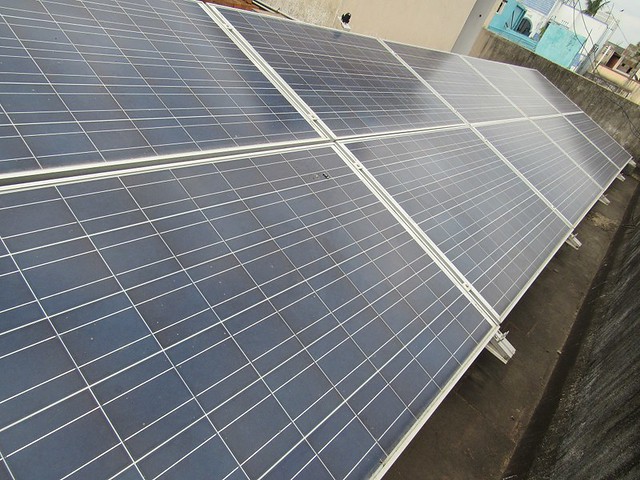
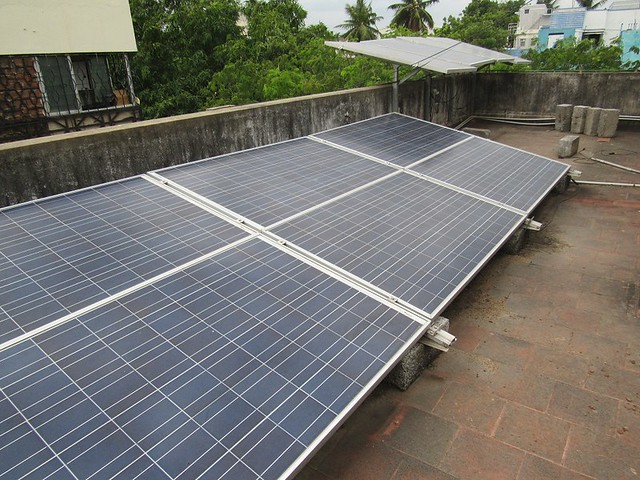
I met Mr. Balachander (and team) of Manufacturing Logistics Control, Chennai, recently. They have installed a 5 KW Solar system two years ago, and another 1 KW solar system recently. I went to see the solar system in their premises and talk to them about their experience with the same.
MLC-Solar-Installation-3

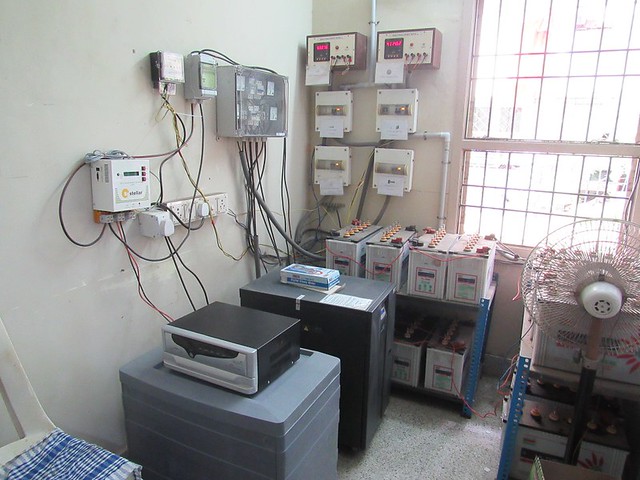
It seems they have been running almost everything in their office including AC, fans, lights, servers, computers, etc. for most part of the day using solar power generated by the 5 KW solar system . This system consists of 20 x 250 Wp panels, 5 KVA grid shared system inverter, 16 x 40 AH battery bank. When the power generated by solar power is insufficient, the power from the grid and batteries chip in. One important feature of their system is: Power from different sources is shared, not switched. 

They use energy efficient appliances like Inverter ACs, LED lights, Super fan, etc. They also measure the amount of energy generated and the amount of energy consumed from each source, at every step. They have plotted a graph with energy bills before and after the installation of solar panel system and the savings is considerable. 

Off-grid solar systems, which they recommend, has two important advantages over grid-tied solar systems. First, there is energy security for the customers as this system (with batteries) will provide non-stop power during the day and night, even during the few hours of power cuts. Secondly, customers will not face the problem of low voltage during the nights (which is common in many houses) as the system will compensate for the same.

MLC-Solar-Installation-2
They feel that adopting energy efficient appliances has made a huge difference in accelerating the RoI after the installation of solar PV modules. They are now testing out a 1 KW system with a smart charge controller that can intelligently switch between battery power (via. solar) and grid power. 

Based on their own experience they are planning to provide similar solutions for customers with existing Inverter systems. There are three common capacities of Inverters systems and hence solar panels, batteries, and other equipment are recommended based on it. So for 650 VA Inverter systems, they recommend one solar panel of 250Wp; for 850 VA Inverter systems, they recommend two solar panels of 250 Wp; for 1500 VA Inverter systems, they recommend four solar panels of 250 Wp. The battery capacity will be decided based on the number of hours of back up required. 

As you can see, such a solution will require customization for each customer, and hence the company is willing to do an energy audit, and will recommend the appropriate solar system based on customer usage, existing appliances, etc. for each customer. You can contact them via the contact form available on their website. 

Have a look at their blog post that contains detailed analysis after a year of running their office on solar power.

MLC-Solar-Installation-1
Disclaimer: This blog post is for your information only and is not a recommendation. This blog is not affiliated with the above mentioned company in anyway and hence readers are recommended to do their own evaluation/analysis before deciding to buy any product or service from the company mentioned on this blog post.
Read More...

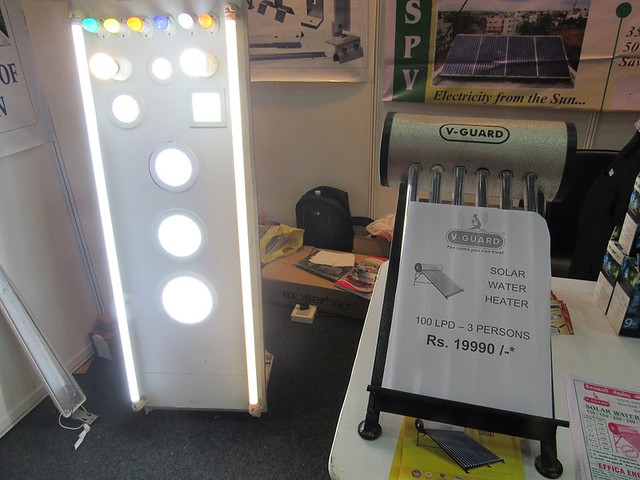
Solar South 2015 Expo, Chennai: Highlights


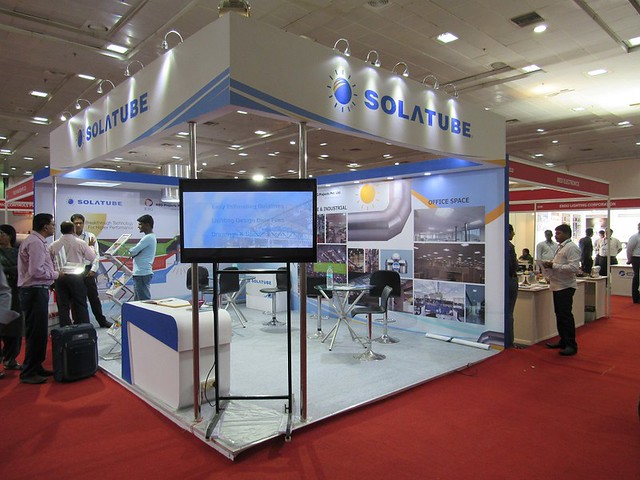
I went to the Solar South, Solar Energy exhibition @ Chennai Trade Center yesterday. Here are some highlights from this expo which is On from June 19 - 21.

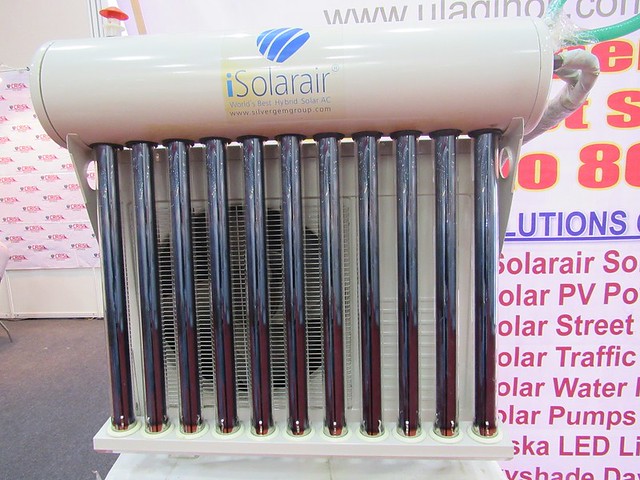
  • Ulaginoli Energy solutions had exhibited iSolarair, the Hybrid Solar AC that can run using solar vacuum tubes (generally used with solar heater systems) or the electrical grid.
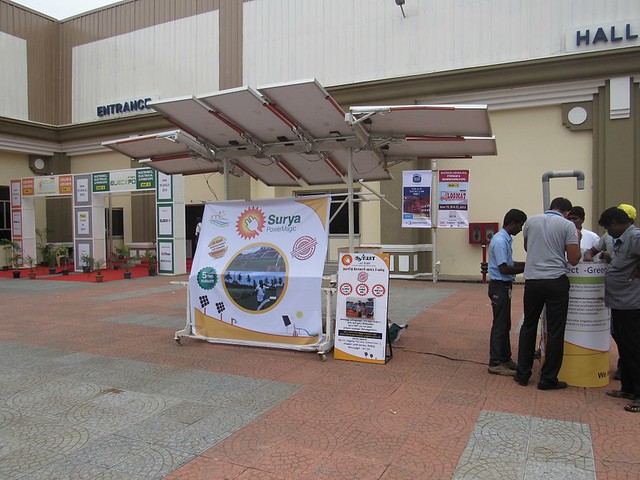
  • Surya Power Magic Pvt. Ltd had displayed their solar water pump solution for agricultural farmers, with a working display outside the exhibition.
  • SOLATUBE and Skyshade Daylights had exhibited their daylight lighting solution using natural sunlight, and shading concepts.
  • VISPRA Solar explained about their UPS/PCU systems. They also had a system that could convert any brand normal UPS into Solar UPS.
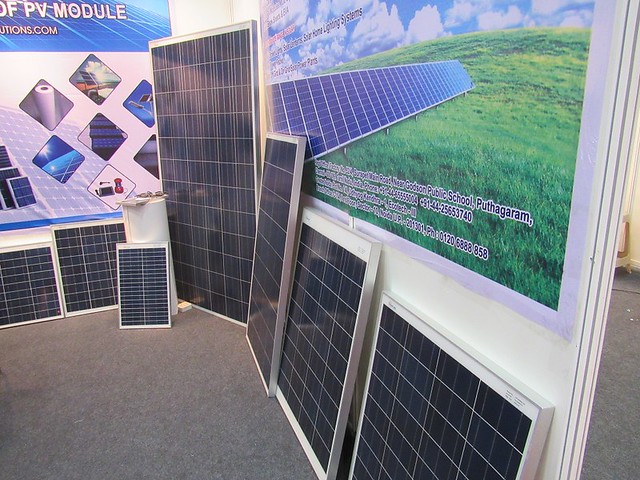
  • LV Solar Solutions and MAS Solar systems are manufacturers of solar panels. The latter also provides hands-on training for students and others to join the solar energy industry.
  • NED Energy Ltd. had displayed their range of Solar Batteries which can handle the variations in charging and discharging prevalent with Solar PV systems.
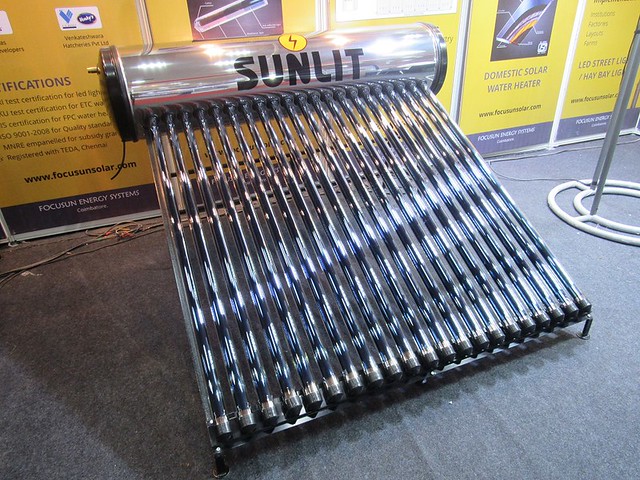
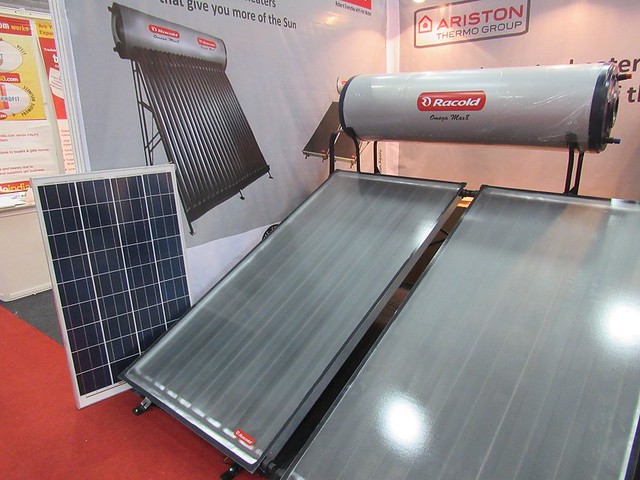
  • FOCUSSUN Energy Systems, RCL Controls, Divya Tooling technologies displayed Solar Water heaters. 
  • MEDI Electronic Devices & Instruments displayed their electronic solutions including Solar pump control, Zero drop solar chargers, MPPT systems, etc.
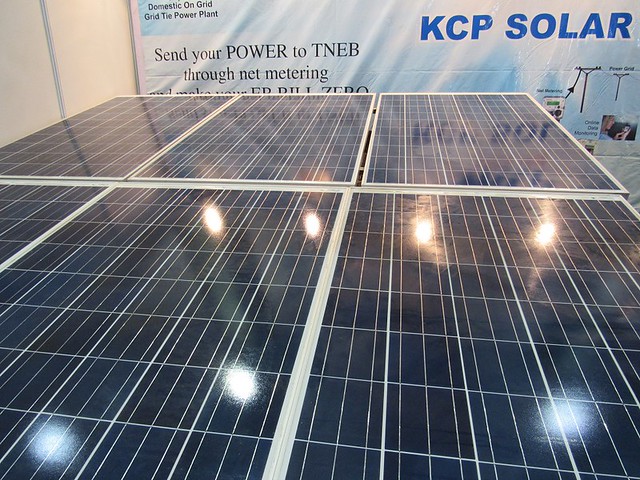
  • KCP Solar Energy, Green Field Solar (P) Ltd, Shree Jayaram Technologies, TRIO Solar, etc. explained their solar system integration capabilities.
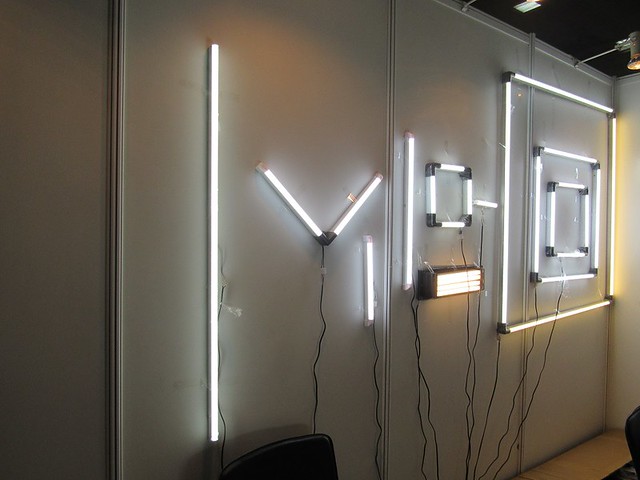
  • There were a few companies exhibiting their LED Light solutions including Photonics.
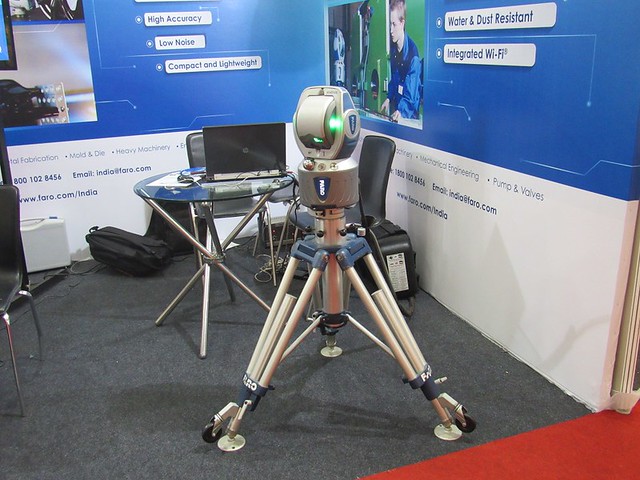
  • FARO had displayed their Coordinate Measuring Machines (CMM).
  • Evolve India representatives told me that they were the distributors for Suntech, zeversolar, Upsolar brands. 
  • Chennai Sun Power representatives told me that they were the dealers for Microtek Inverters & UPS. 
  • There were some publications like Power Watch India, Energy & Power who displayed their magazines for the power sector.
  • And there were a few more stalls including a canteen that served food and beverages :)
If you are in Chennai today or tomorrow you might want to visit this exhibition to gather more knowledge and evaluate renewable energy systems for your house/company. 

Here are some interesting pics I clicked during the 2015 Solar South Exhibition @ Chennai Trade Center today:
Solar-South-Chennai-Expo-Stalls-r
Solar-South-Chennai-Expo-Solar-Water-Heater-1-r
Solar-South-Chennai-Expo-Solar-Panels-r
Solar-South-Chennai-Expo-LED-Lights-r
Solar-South-Chennai-Expo-Hybrid-Solar-AC-r
Solar-South-Chennai-Expo-Coordinate-Measuring-Machine-r
Solar-South-Chennai-Expo-Solar-Water-Heater-2-r
Solar-South-Chennai-Expo-Solar-Panels-2-r
Solar-South-Chennai-Expo-Solar-Water-Pump-Entrance-r
Solar-South-Chennai-Expo-LED-Lights-Solar-Water-Heater-r
Read More...

Interesting Solar Products Available Online (Amazon.in)


Did you know that you could buy solar panels, solar chargers, LED lights powered by solar modules, solar charge controllers, solar flash lights/emergency lamps, solar spot lights, light with motion sensor, lanterns powered by solar panels, etc. directly from Amazon.in, and get it delivered to your home? 

Click here to see the entire range of Solar products available on Amazon.in

Here are some interesting Solar products I found on Amazon.in -

1. 100W/12V Solar PV Module: Yes, you can buy as many 100W solar modules as you wish and setup a mini power generating plant in your house. Just be careful to check if the solar panel doesn't arrive in damaged condition (return it, if it does).

2. Flexible Solar Panels: These are flexible/foldable thin film based solar panels that can be stuck to a wall or fixed to a window sill with no supporting structure. If you don't have space on your rooftop, you might find this product useful.

3. MPPT Solar Charge Controller: If you use a battery in your solar panel system, you could use this MPPT solar charge controller to charge it safely and more efficiently. An MPPT charge controller generates 25% more power when compared to PWM charge controller.

4. 20W Solar Module with Portable Battery: If your application is to power a couple of LED lights and a DC fan for 1-2 hours (during power cuts, etc.) you could buy this combo of 20W solar panel and portable battery.

5. Solar Power Bank: Instead of buying a normal power bank (battery) for charging your mobile devices, why not buy a solar power bank and start charging your USB-based charging devices through it? These mobile chargers can be powered both by solar or directly by the mains, if you want the charging to happen faster.

6. Rechargeable Solar Fan with Battery/Charger: If you want to cool yourselves during power cuts in summer or if you want a fan to operate in remote areas where electricity is not available, this solar fan with rechargeable battery/charger and solar panel might just be a perfect gift for yourself!

7. Solar GSM Alarm with Video Recording: This solar-based alarm detects if there is any motion in the specified range in your property, when you are away, and generates an alarm. It will also send a snapshot/video of the intruder activity to your mobile phone as an MMS.

8. Solar Kitchen Scale: This kitchen scale uses solar power to operate and display the weight of ingredients you place on it, on an electronic display, so that you can be sure of the weight of each ingredient you put into your cooking.

9. Solar LED Garden Lamp with Mosquito Repellent Technology: Often, we want to sit in the garden during late evenings and read a book peacefully. But we may find there is no power line/light and there are many mosquitoes during that time. This product - Solar LED garden lamp with mosquito repellent solves the problem perfectly. It charges the battery during daytime and activates the lamp and ultrasound frequency to repel the mosquitoes, during night time.

10. Solar Wall Light with Motion Sensor: This solar wall light will get charged in the day through built-in solar panels and will light up in the night only when it detects any people/motion around it. This solves the problem of security and lights staying on needlessly.

11. Mobile LED Emergency Lamp:These LED lamps with built in battery and external solar panel (with long cable) can be a perfect emergency lamp or a replacement to kerosene lamps.

12. Solar LED Table Lamp: If you are looking for a table lamp with built-in battery that can be charged with solar panels, this is it! This table lamp has a gooseneck for directional flexibility and focused lighting for bright visibility over a small region, hence optimized for reading during the night time.


Click here to see the entire range of Solar products available on Amazon.in

Disclaimer: The links in this post are affiliate links. If you click on them and buy the product, I may get a small commission. While this listing is to enable you to discover new products, this listing should not be considered as a recommendation. Customers are encouraged to do their own research and evaluation before buying any product mentioned here.
Read More...

Solar Products from Sukhila Power Electronics

Here are some solar products from Sukhila Power Electronics, whose officials I met during the recently concluded HYREX 2015 exhibition at Hyderabad. The below info has been taken from their website.

1. Solar Charge Controller with Source Selector: This is microprocessor based and protects the battery from over charging or excessive discharge. 

2. Solar Sine Wave Inverter: This converts the variable DC voltage generated by Solar PV Modules into clean Sinusoidal 50 or 60 Hertz AC voltage. Their Solar sine wave inverters are available for Single Phase (5 kVA to 10 kVA) or Three Phase (15 kVA to 60 kVA). 

3. Solar AC Water Pumping System: Used with irrigation systems, urban building water supply systems, etc. this Solar Water Pumping system connects to and switches optimally between solar power and grid power for water pumping systems. 

4. Solar Power Conditioning Unit: With electronic overload and short circuit protection, it rapidly charges the photovoltaic array on/off to control the charging of the battery and load. 

Further Info/Manufacturer's product page: Sukhila.

Note: This website is not affiliated with the above mentioned company in anyway. Please refer to their site for latest info, as there maybe changes. This article is not a recommendation; customers are encouraged to do their own research and valuation before buying anything. 
Read More...

Land Mark Solar: Solar Petrol Pumps in Telangana & AP

During the recently concluded HYREX 2015 Renewable Energy Expo at Hyderabad, I met the representatives of Land Mark Solar, the suppliers for Solar Petrol Pumps in Telangana & Andhra Pradesh. They also offer other services in the renewable energy segment like EPC, Solar Panel solution for organizations, etc. In this article, let's focus on their Solar Petrol Pump solution. 

Petrol pumps are located everywhere - both in rural and urban areas. But they may not get adequate power through the grid always as long power cuts are common in areas outside the big cities. They generally employ diesel generators to compensate for these power cuts, but even for petrol pumps, that can be an expensive proposition on the long run!

Hence it maybe a good idea to install solar panels to power petrol/Diesel pumps.

Following is the summary of the Solar Petrol Pump solution offered by Land Mark Solar. (They provide Solar Panels made by HBL Solar, the large Govt. PSU.)

Petrol/Diesel Pump Type: 2 Nozzles, 1 Petrol and 1 Diesel, 0.75 HP Pump ::: Solar Power plant of capacity 1440Wp size with 4 hours battery back up; Suitable PCU with high crest ratio & module mounting structure. 

Petrol/Diesel Pump Type: 4 Nozzles, 2 Petrol and 2 Diesel, 0.75 HP Pump ::: Solar Power plant of capacity 2400Wp size with 4 hours battery back up; Suitable PCU with high crest ratio & module mounting structure. 

Petrol/Diesel Pump Type: 2 Nozzles, 1 Petrol and 1 Diesel, 1 HP Pump ::: Solar Power plant of capacity 1440Wp size with 4 hours battery back up; Suitable PCU with high crest ratio & module mounting structure. 

Petrol/Diesel Pump Type: 4 Nozzles, 2 Petrol and 2 Diesel, 1 HP Pump ::: Solar Power plant of capacity 2400Wp size with 4 hours battery back up; Suitable PCU with high crest ratio & module mounting structure.

They told me that they have completed a few solar petrol pump projects in Telangana & AP. So if you are interested to power your petrol/solar pumps through solar energy, and you are located in this region, you might want to consider Land Mark Solar for your project. 

Company Contact: Land Mark Solar Pvt. Ltd., #17-1-391/S/61/1, Singareni Colony, Saidabad, Hyderabad - 500059. Ph: 9908277771.

Disclaimer: This website is not affiliated with the above mentioned company in anyway; all details have been taken from the brochure provided to me by the company officials. Information subject to change with time, please check with the company officials for the latest info.


Read More...

Concentrated Photovoltaic (CPV) in India: Chroma Energy

Chroma Energy is trying to make Concentrated Photovoltaic (CPV) Technology available in India. This, when combined with solar trackers, can dramatically improve the efficiency of solar cells/solar systems, they say.

The two dominant technologies to generate solar power today are Crystalline and Thin Film Solar PV. Solar Thermal is also there, but the adoption/efficiency is lower. CPV is a relatively new technology that uses optics to concentrate sunlight on small and efficient solar cells. These systems are not only smaller, but their energy conversion ratio/efficiency is significantly more than silicon-based PV technologies. The technology brief is here.

Some benefits of CPV:
  • CPV requires less land than Solar PV (for the same capacity).
  • CPV is not water intensive. 
  • CPV has a lower energy payback period.
  • Since they are high-mounted structures, land below them can still be used for other purposes.
  • Suitable for countries like India that have high irradiation levels at many places. 
  • If manufactured in India, which has the capacity and the ecosystem, a number of jobs and ancillary industries will be supported. 
Let's hope the company will bring CPV technology to India; start producing and generating electricity through CPV panels, soon. This technology looks exciting and promising to me.  

Further Information: Chroma Energy.

Disclaimer: This blog is not associated with the above mentioned company/products in anyway. All information is taken from their website. Please refer to their website link for the latest info. 
Read More...

Single Axis Solar Trackers in India: Scorpius Trackers

Single Axis Solar Trackers from Scorpius Trackers in India, Introductory Video:


Scorpius Trackers, based out of Pune - India, is the manufacturer of Single Axis Solar Trackers that automatically and continuously track the sun, and rotate solar panels to face the direction where sunlight exposure is maximum, from morning to evening. Solar trackers increases the energy generated (per panel) and hence decreases the land required for a solar plant project. The company claims that energy output over fixed PV increases by 18 - 25%, for a corresponding increase of 9 - 12% Capex per MW. I met the company officials during the recently concluded HYREX 2015 Renewable Energy exhibition at Hyderabad. 

According to their brochure, their solar tracker system calculates the position of the sun using various algorithms and determines the optimum rotation angle every minute. It also adjusts the tracker tilt based on the Solar AZIMUTH, and back tracking tries to avoid shading of the rows of PV modules on the shaded side. When the tracker detects high wind speed it can reduce its presented cross section to the wind, hence reducing the force on the mechanical structure. This is called tracker stowing.

The tracking system can be operated using an AC source (Grid) or using the power generated by the Solar modules themselves. They say one 250W module is sufficient to power a 250 kW tracker block. Also, the integrated battery in the controller maybe sufficient for tracker movement for up to 5 days, in case of temporary non-availability of external power. The company says that the pay back on tracker investment is less than 3 years. 

Scorpius Trackers manufactures single axis trackers with 100% frictionless pivots, no bearings, no bushes, no lubricants - hence reducing maintenance requirements. The solar trackers are mostly used in large solar plants, but can also be used for stand alone ground-mounted/roof-top installation like trackers for solar pumps. 

Further Information/Company Website: Scorpius Trackers.

Disclaimer: This website is not associated with the above mentioned company in anyway. Readers are encouraged to do proper research and evaluation of both the company and their products before deciding to buy them. Information given here has been taken from their brochure/website and is subject to change anytime. Hence, refer to the company website for the latest information.
Read More...

Sun On Wheels: Solar + Energy Efficient Appliances on a Van (Basil)

Basil Energetics is an innovative company focused on providing Solar Power + Energy Efficient appliances, based out of Chennai. They recently demonstrated the effectiveness of their Energy Efficient appliances powered (only) by Solar Panels mounted inside/on an insulated container of a Van, in the recently concluded REnergy renewable energy expo at Coimbatore. I met the Chairman of the company at their Ambattur office in Chennai yesterday.

The best thing about their innovative system is: It powers 1 x 1.5 Tonne AC, 1 x 300L Refrigerator, 4 x LED Lights, 2 x Fan using a set of 4 x 4 Thin Film Solar Panels of 100W capacity each (Total: 1.6 KW) that occupies an area of 125 sq. feet. This is possible because they have designed all the above mentioned appliances to be highly energy efficient. 


You can see their (partial) setup in the above photo. They have not used batteries in this system, and hence, I was informed that the entire system was running using the solar power generated on the premises on the day of the expo. The heart of the system (if we can call it that) is a controller (iGrid) that looks like this: 


This controller monitors and measures the available power from the solar panels, and also monitors the load requirement for any given time (continuously), and:
  • If there is adequate power from the solar panels, it will run all the (DC-based) appliances directly using solar power.
  • If there is insufficient power from the solar panels, it will run as many appliances as possible using solar power, and will run the remaining appliances using the grid power (if connected).
  • If there is no solar power (during the night - for example), it will run all the appliances using the power from the grid. 
  • Excess power can be fed back to the grid if the system is enabled to do so. A few Indian states pay consumers for receiving power generated by their rooftop panels. (If grid-connectivity is sanctioned and appropriate devices as recommended by the electricity board is used.)
If required, they can also provide batteries (to store solar energy) and micro-inverters (to run other appliances). However, batteries are not recommended due to their high cost, frequent replacements, and other limitations. Besides, electricity from the grid is mostly available during the night in many places. 

Here's the Zero Energy Home chart prepared by the company: (Click to see a larger picture)

They have taken the common appliances used in a typical home and the number of hours they are used, and have calculated the electricity consumed by each over a day. The first five appliances are the energy efficient ones sold by them and the remaining five are common ones sold in the market. According to this scenario (provided to me by the company), the electricity consumption per day comes to 7.15 units and the energy fed back to the grid using a 2 KW solar panel system comes to 7.35 units. That means, the house can produce more electricity than it consumes! Please note: Since there is no battery/charge controller/inverter involved, this is applicable only in states that have grid connectivity and feed-in tariff option. Also, there will be variation on case to case basis.

You can read more about their energy efficient appliances, and how much power (and money) one can save by using energy efficient appliances from here.

Basil Energetics has introduced another interesting product: Battery powered electric bicycle (iZip)

This is an indigenous electric bicycle that uses a brushless HUB motor (back wheel). They have used contactless throttle for stepless variation of speed and removable lithium-ion batteries that give 6-times more life compared to lead-acid batteries. Max. speed is 20-15 KM. Range is 25 KM per charge. Time taken for charging is 45 - 90 minutes, depending on the state of battery discharge.

Here's the company website for further information/contact details: Basil Energetics. 

Disclaimer: This article has been written based on the information provided to me by the company officials. The photos have been published with their permission. Readers are requested to verify all claims while engaging with the company/products. This article is for your information only (not promotional) as I think they are doing something very interesting. This site is not affiliated to the company in any way.
Read More...

Solar Impulse 2, the Solar Airplane, will Land in India today (March 10, 2015)


Solar Impulse 2, the Solar Airplane, will land in Ahmadabad, Gujarat, India - today night around 9:30 PM (March 10, 2015) from Muscat. It is expected to dock in the Airport for a couple of days and will leave to Varanasi, thereafter. During that time, the co-founders of the Solar Impulse project - Bertnard Piccard & Andre Borschberg, and the Solar Impulse team are expected to promote green technologies around the city. I guess visits for public and school children have also been arranged. If you are in/around these two cities, you might want check it out! :)

BTW, Solar Impulse 2's mission is to show the world that it is possible to fly around the world using just solar energy/stored solar energy in batteries, and nothing else. Let's hope Green Tech will make this world a better place to live, without exploiting/destroying natural resources.

You can follow the journey of Solar Impulse 2 LIVE on their website. 

Here's another interesting video that shows the making of Solar Impulse 2:


Read More...

Solar PV & Electrical Component Testing Services: STQC

Standardization Testing and Quality Certification (STQC) Directorate is a Government of India enterprise that provides quality assurance services for both public and private companies. These services include testing, calibration, IT & e-governance, training, and certification. I met their representatives at the recently concluded HYREX 2015 expo, Hyderabad. 

STQC Laboratories have established test facilities for performance evaluation of Solar Panels and PV cells. Products tested include Solar PV Lanterns, lighting systems, batteries, etc. It seems this Solar PV test facility is available at their Kolkata, Bangalore and some more laboratories. Even their Hyderabad center is expected to get it in the near future. Learn more about Solar PV testing here.

STQC also offers testing facility for electrical components related to Solar/Renewable energy systems like UPS, Energy meters, Inverters, Stabilizers, etc.

According to their website, STQC test laboratories are recognized by National Accreditation by NABL. Their laboratories are recognized by BIS, DOT, RDSO, ISRO, DRDO, MNES, etc.

Further Information: STQC Website.


Read More...

Solar Thermal Heating Systems in India: SunX Solar

SunX Solar is a Hyderabad-based company that manufactures Solar Water Heating systems, among other solar products, in India. I met their company representatives in the recently concluded HYREX 2015 expo at Hyderabad. They have their own manufacturing facility in Bangalore and another manufacturing facility for solar water heating systems in Hyderabad.

Here's a gist of some products they manufacture and supply (click on the links to their site to know more):

Further info/Vendor's website: SunX Solar.

Disclaimer: Information given here was taken from the vendor's website/brochure. It is subject to change anytime. Please check once again with the vendor's site to get up to date information. This blog post is only for your information and is not a recommendation.
Read More...

Andromeda Energy Technologies: Solar Lanterns, Modules, Inverters

Andromeda Energy Technologies is a company based out of Secunderabad, Telangana. They have branches in Kolkata & Delhi, and support customers in many locations across India. They manufacture/sell Solar PV & Solar Thermal products. Among other products, they provide Solar Lanterns, Solar Panels, Solar Inverters and Solar LEDs. 

I met their representatives in the recently concluded HYREX 2015 expo at Hyderabad, and they provided me with a brochure containing the following product details: 

1. Solar Lanterns: 


2. Solar Modules: The company manufactures Solar Modules in the following capacities (at the time of writing this article): 5Wp, 8Wp, 10Wp, 12Wp, 14Wp, 18Wp, 20Wp, 30Wp, 35Wp, 37Wp, 40Wp, 50Wp, 70Wp, 80Wp. Details about their Solar Modules can be found on their website. 

3. Solar Inverters:

In their brochure, they say that their Solite Inverters are designed to produce and provide home quality pure sine wave 230V AC to run electrical appliances. This inverter, it seems, uses sunlight to produce electricity. 

Inverter models: 

a. SOORAJ AETPL_100 ~ Battery: 12V/75Ah; Invertor: 400VA, 230V AC; Load operating hours: 396 Whrs.
b. SOORAJ AETPL_150 ~ Battery: 12V/120Ah; Invertor: 600VA, 230V AC; Load operating hours: 616 Whrs.
c. SOORAJ AETPL_200 ~ Battery: 12V/150Ah; Invertor: 600VA, 230V AC; Load operating hours: 736 Whrs. 

Please note: Technical information provided here was taken from the brochure provided by the company representatives during the expo. These may change with time and hence it is recommended to visit the vendor website for the latest information about their products. 

Further Info/Manufacturer's website: Andromeda Energy Technologies.
Read More...

Solar Power Plant with Solar AC: Titan Power Grid

Titan Power Grid, based in Hyderabad, India, offers Solar Power Plant with Solar AC, among other solar-based products/solutions. I met their representatives at the recently concluded HYREX 2015 Solar Expo at Hyderabad. 

This is the Solar AC they had displayed in their stall. It seems they make the Solar AC in association with SHARP. As you can guess, the Solar AC uses Inverter AC technology that can adjust the speed of the compressor based on the ambient air temperature which results in lower energy consumption/energy bills, and quieter operation. 

But the Solar AC developed by Titan Power Grid, the company representatives say, is more efficient than Inverter ACs because they use more energy efficient parts and power the motor, compressor, fans, etc. through solar. Hence, their 1 Tonne AC is rated at 560W that can be provided by 600W Solar Panels, which is lower than the 1000W+ power rating of normal ACs (according to their website). 

They provide three options for Solar AC: 

  • Stand-alone energy efficient Solar AC that is not powered by Solar Panels.
  • Solar AC powered by Solar Panels and with AC Synchronization Controller to enable the AC to be operated with Solar power or Grid.
  • Solar AC with Solar Panels, AC Synchronization, and Batteries to enable the AC to be operated with Solar Power, Grid or Saved solar power in the batteries. 
For further details on Titan Power Grid Solar AC, please refer to their product page. It seems, currently they are offering Solar ACs only along with 3KW (or more) Solar Power Plants. Right now you can find the prices of Solar Power plants from the right-hand side news section of their website. Their representatives told me that they hope to sell Stand-alone Solar ACs shortly.

Also, have a look at their excellent guide (pdf) explaining the basic components that go into the making a solar power plant.
Read More...

Prepaid Solar Electricity for the Masses: Simpa Networks

Simpa Networks is an Indian company based out of Bangalore that offers prepaid solar electricity in a pay-as-you-go model. 

How does it work?

In this model, for a small fee, the company provides a solar home system (solar panel, battery, control circuit, LED lamps, charging points, etc.). After the initial payment, consumers can use their mobile phone to top up their solar home system and pay an amount to unlock/access only the amount of electricity required by them. 

This amount, the company claims, contributes towards the ownership of the provided solar system. When the cost of the solar system is paid in full after multiple installments, consumers own the system and they no longer have to pay to access electricity.

This is an interesting model for three reasons: 

  • The consumer need not pay the entire cost for the solar home system upfront, and pays only a small portion of it (not sure how much that small portion is, will try to update if I get the info).
  • Consumers need not pay regularly (weekly or monthly), which they may not be able to. Instead, they pay when they have money and when they want electricity.
  • Each payment also includes a small amount towards the ownership of the device, and consumers can own the device after a few months/years depending on their usage. 
Plus: 

The company has integrated the solar home system and mobile payment technology into a single solution, and has introduced the progressive payment system where customer pays when he wants to access electricity, much like a prepaid mobile, which are all excellent. 

Minus: 

However, if the consumer does not pay for a long time, the generated electricity (beyond what can be stored in the battery) becomes a waste. Also, the battery needs to be changed after its lifetime (which is generally limited), and it's not clear who bears this cost or if that can be done and how much replacement batteries will cost. 

You can get more details about their system from Simpa Networks website and the contact details of the company is here.
Read More...

Ecozen: Solar-based Micro Cold Storage


Ecozen Solutions is based out of Pune, Maharashtra. They manufacture renewable energy-based products, including the solar-based Micro Cold Storage. A video overview of this product is embedded above. 

A micro cold storage powered by solar panels enables farmers to store vegetables/fruits for a longer term, hence enabling them to sell it at best prices.

The Ecozen Solutions Micro Cold Storage is powered by solar panels, but can also draw power from the grid where needed (hybrid model). They use 3.6 KWp - 10 KWp solar panel capacity (as required) and claim that their model is battery free. The storage capacity varies from 3.5 - 10 Tons; and the pre-cooling capacity varies from 0.5 - 1 Tons.

Refer to the following links for further info on the company/product: Ecozen Solutions Website; Product Brochure.

Note: This website provides information to help you identify interesting/useful renewable energy products. Please do your research on the product and company before deciding/buying. Data mentioned here is based on the info available on their website at the time of writing.
Read More...

Solar Water Purification RO/UF Systems by Jackson in India

Solar power is abundantly available in India. So why not use that for water purification, especially in areas where electricity is not available, or in remote areas? 

When I attended the RENERGY 2014 in Chennai, I came across the solar water purification system (using Reverse Osmosis and Ultra Filteration technologies) manufactured by Jackson Power. These systems can cater to the drinking water requirements of 3-4 families on a daily basis, according to their website. They use solar panels to filter the water, hence external electrical connection may not be required.

I think this is a good application of solar energy, especially for a country like India which needs water purification systems in rural areas where electricity is not available or is not regular. Only, if these systems become affordable (due to mass adoption), we can have many such solar water purification systems deployed across the country. 

Have a look at the details of their solar water purification systems from here. The brochure is here.

This blog post is just for your information, and is not a recommendation. We don't have any affiliation with the vendors/products mentioned here. People are requested to do ample research before deciding to buy any product or service.
Read More...

Solar-powered Beach House in Kerala, India: Marari Villas Bougainvillea


Marari Villas Bougainvillea is a solar-powered beach house/villa in the South Indian state of Kerala, known for its beaches, rivers, backwaters & coconut trees. The two-bedroom villa with a lounge & garden is equipped with many modern amenities and services, while retaining the traditional Indian architecture. As this property is located next to a beach, guests can enjoy beach view from within the rooms.

The best thing about this villa, located in a small village in central Kerala, near Aleppy and Cochin, is it is completely off-grid and it uses solar power for electricity and hot water. I hope more tourist homes/properties adopt solar energy for their needs and stay completely off the grid, especially those in remote locations. 

You can know more about Marari Villas Bougainvillea from their website. Don't forget to see the stunning 360 Degree tour/view of the property from here.
Read More...
 
Copyright (c) 2010 SWHE bySWHE
Sponsored by : 1, 2, 3